
Insulated Panel Machine
Sinowa is a insulated panel machine supplier from china, customized high-quality & high efficiency insulated panel machine at low price, insulated panel machine has diversified and multifunctional production characteristics, which may produce products with different specifications such as PU, PF, PIR, etc. The surface material may be aluminum foil, colored steel, cement base cloth, kraft paper, non-woven fabrics, etc. The products are widely applied to such occasions as construction, decoration, pipeline ventilation, subway construction, etc.
The insulated panel machine is able to continuously and efficiently produce high-quality PU and Phenolic insulation boards.
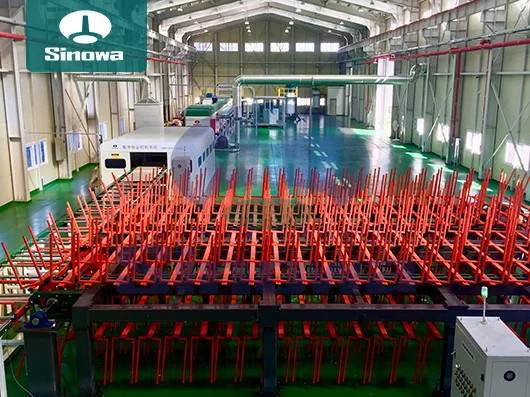
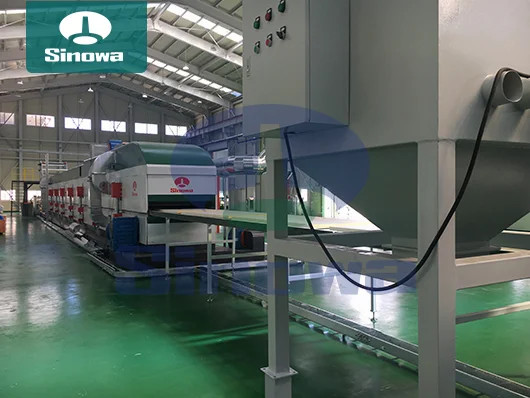
We spare no efforts to improve our product quality and technological reliability by employing the most cutting-edge and the most reliable support and processes to make our products highly reliable and endurable. As a result, the insulated panel machine is highlighted by many perfect qualities. It is the core idea in Sinowa's product roadmap to surpass our competitors in terms of design philosophy, manufacture methods and service level, going for excellence and leading position and making constant improvement on our products and services, which is also our core value system to create efficiency and convenience for our customers.

Well-grounded on our solid strength as a renowned large-scale enterprise, Sinowa has a high starting point in developing industrial assembly lines. Based on the advanced science and technology introduced from within and without the country and supported by a great number of first-grade parts and components from the home and aboard, the insulated panel machine has a high-level configuration of supporting products in terms of machinery, electrical control, hydraulic pressure, automatic measurement and tracking, and so on. This is a strong proof of our product’s reliable quality and high efficiency.
The first-class appearance design and excellent energy saving measures make it unnecessary for customers to additionally construct the heat preservation and isolation room for production around the clock throughout the year, so that the customers may save lots of resources and costs.
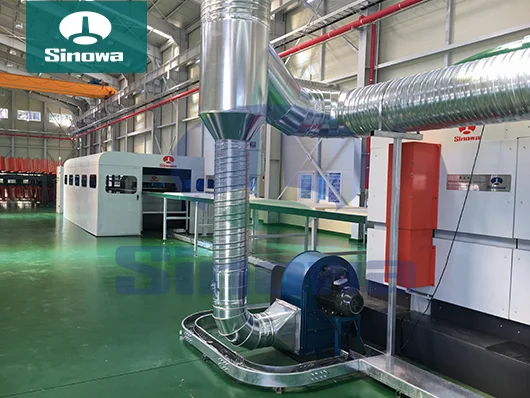
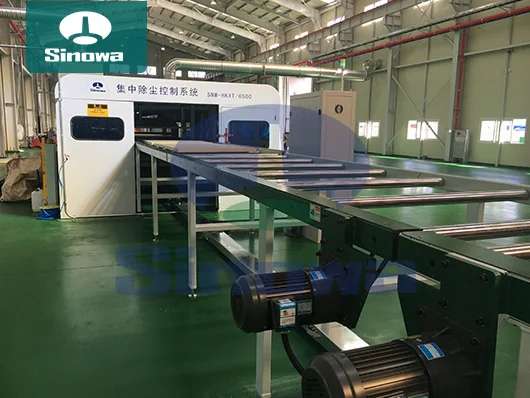
Modularized standard design and important parts machined with CNC machine tool make the insulated panel machine have excellent quality assurance. Dependence on the man-made factors is eliminated. The operation is precision, with the highest operation speed of 30m/min. The insulated panel machine has the world-class production efficiency.
The high performance and reliable multicomponent cyclopentane foaming technology and equipment of Sinowa may be also applied to the foaming process of the phenolic aldehyde board. Therefore, our customers may not only freely adjust the foaming matching according to the raw material, but also save lots of costs. Moreover, they are of significance for environmental protection.

Sinowa's industrial production line of insulation panels is distinguished by its impressive performance of energy conservation. In each high point of energy consumption throughout the entire insulated panel machine are implemented corresponding measures to considerably lower the consumption level. For example, the body of the lamination belt conveyer is covered with insulation panels in very reasonable structures, which doesn’t blemish the overall outlook but greatly increases the insulation performance. The entire insulated panel machine is constantly optimized and improved so that the consumption of each power source is significantly reduced. The motor power of our lamination conveying system is only 3.0 kw, about 50% less than those of the same kind. All in all, the energy consumption of the whole industrial insulated panel machine equals 40% or even less of the equivalent lines in the market.
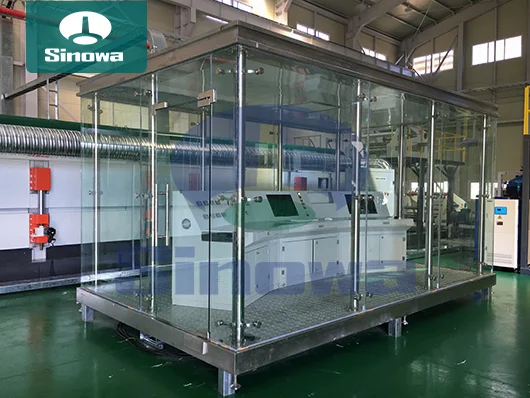
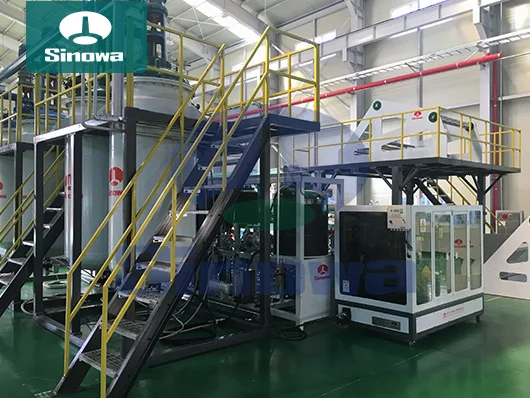
The insulated panel machine of Sinowa adopts the most advanced concepts in the world to realize the modularized design with all the parts bolted together rather than welded. In standardized production, the parts can be dismantled and exchanged, so the production cycle is drastically shortened and the maintenance becomes by far easier. Through finite element analysis, the equipment design is greatly optimized to realize modularization, digitization, and weight-minimalization.
Insulated panel machines represent a core category of industrial processing equipment dedicated to the automated fabrication of composite insulated panels, which are widely recognized for their excellent thermal insulation, structural stability and multifunctional adaptability in modern construction and manufacturing industries. These mechanical systems integrate multiple processing units to complete continuous molding, compounding, shaping and trimming of raw materials, realizing the standardized production of sandwich panels composed of surface protective layers and thermal insulation cores. With the continuous advancement of industrial manufacturing technology, insulated panel machines have gradually evolved from simple semi-automatic mechanical structures to highly integrated intelligent production lines, optimizing production logic and mechanical configuration to adapt to diverse raw material combinations and production demands. The inherent mechanical characteristics and structural designs of these machines determine the dimensional accuracy, structural uniformity and service durability of finished panels, making them indispensable infrastructure for the large-scale production of energy-saving building materials. In the context of global emphasis on energy conservation and green construction, the research and application of insulated panel machines have gained increasing attention, and an in-depth understanding of their structural composition, performance characteristics, classification attributes and application scenarios is conducive to promoting the standardized development of the insulated panel manufacturing industry.

The overall structure of insulated panel machines follows modular mechanical design concepts, and the complete production system consists of multiple interconnected functional modules with independent processing functions and coordinated operating logic. The rack structure serves as the fundamental supporting component of the entire equipment, mostly manufactured through heavy-duty welding and integral casting processes. This structural design effectively enhances the overall rigidity of the machine, avoiding structural deformation and vibration displacement during long-term continuous high-load operation, and providing stable mechanical support for subsequent material processing procedures. The feeding module is responsible for the orderly delivery of raw materials, including metal coils, non-metal surface sheets and thermal insulation core materials. It is equipped with adjustable feeding rollers and auxiliary positioning components to ensure consistent feeding speed and accurate material alignment, preventing positional deviation of raw materials in the initial processing stage. The pressing and compounding module is the core functional unit of the equipment, adopting double-roller extrusion and layered composite structures. This module applies uniform mechanical pressure to tightly bond the surface layers and the inner thermal insulation core, eliminating gaps between different materials and enhancing the overall compactness of finished panels. Equipped with precision transmission parts such as servo motors and reduction gears, the transmission module realizes stable power output and accurate speed regulation, ensuring the synchronization of operation among all functional modules and reducing mechanical errors caused by inconsistent operating frequencies. The cutting and trimming module adopts high-precision cutting components and adaptive sizing structures, which can complete fixed-length cutting and edge trimming of composite panels according to processing requirements, smoothing rough edges and unifying panel dimensions. In addition, modern insulated panel machines are equipped with auxiliary functional structures including dust removal devices, cooling circulation systems and automatic stacking components. The dust removal structure cleans debris generated during cutting and forming to maintain the cleanliness of the processing environment; the cooling system accelerates the solidification and bonding of composite materials to improve forming efficiency; the stacking structure automatically arranges finished panels to reduce manual handling procedures and optimize production workflows.
The performance attributes of insulated panel machines cover mechanical operation performance, production processing performance and adaptive application performance, forming a comprehensive performance evaluation system that determines production efficiency and product quality. In terms of mechanical operation performance, high-rigidity rack structures and optimized transmission systems endow the equipment with excellent operational stability. The vibration amplitude of the machine remains within a low range during continuous operation, and the dimensional tolerance of processed panels is controlled at a tiny error level, effectively avoiding product quality fluctuations caused by mechanical vibration. The driving system composed of servo motors and intelligent control components achieves stepless speed regulation, enabling the equipment to switch flexibly between different production speeds to meet the processing requirements of different panel specifications. Energy-saving performance is another key operational advantage of modern insulated panel machines. Optimized transmission structures and energy-efficient driving components reduce unnecessary power consumption during mechanical operation, lowering the overall energy consumption of unit product processing compared with traditional mechanical equipment. In terms of production processing performance, the equipment realizes one-stop integrated processing from raw material feeding to finished product stacking, simplifying intermediate processing links and shortening production cycles. The internal pressure control system can adjust extrusion pressure in real time according to the hardness and thickness of raw materials, ensuring uniform internal density of composite panels and consistent bonding strength between layers. Adaptive cutting technologies enable the equipment to process panels of different lengths and widths without repeated mold replacement, improving processing flexibility. In terms of adaptive application performance, the surface of vulnerable mechanical parts is treated with wear-resistant and anti-corrosion processes, which slows down the aging rate of components and extends the overall service life of the equipment under harsh industrial production environments. The modular assembly design facilitates daily maintenance and component replacement, reducing equipment failure rates and maintenance costs in the later operational stage. Moreover, intelligent control interfaces simplify operation logic, enabling operators to master production parameter adjustment methods in a short time and lowering the skill threshold for equipment operation.
Insulated panel machines can be classified into multiple types according to structural forms, automation levels and processing raw materials, and different types of equipment have distinct functional characteristics and application orientations. Based on automation degrees, the equipment is divided into semi-automatic production lines and fully automatic production lines. Semi-automatic insulated panel machines have relatively simplified structural configurations, with partial processes such as raw material feeding and finished product discharging requiring manual assistance. This type of equipment has a small footprint, low operational difficulty and low early-stage investment cost, making it suitable for small-scale processing factories with limited production demands and simple product types. Fully automatic production lines adopt integrated intelligent control systems, realizing unmanned automatic operation of the entire process from raw material input to finished product output. Equipped with intelligent sensing elements and automatic adjustment components, the equipment can monitor processing parameters in real time, automatically correct minor deviations in the production process, and is applicable to large-scale industrial production scenarios with high output requirements and complex product specifications. According to processing raw materials, insulated panel machines are categorized into metal surface panel processing equipment and non-metal surface panel processing equipment. Metal surface panel machines are mainly used for processing composite panels with metal color steel plates as surface layers, equipped with reinforced pressing structures and anti-scratch feeding components to avoid surface damage to metal raw materials during processing. Non-metal surface panel machines adapt to raw materials such as inorganic plates and polymer plates, adopting flexible pressure regulation structures to prevent brittle non-metal materials from cracking and deforming during extrusion processing. Based on structural combination forms, the equipment can be classified into integrated all-in-one machines and split combined production lines. Integrated all-in-one machines concentrate all functional modules on a single rack, featuring compact structure and convenient transportation and installation, which is suitable for production sites with limited space. Split combined production lines separate feeding, compounding, cutting and other functional units into independent mechanical structures, realizing linkage operation through intelligent control systems. This type of equipment has strong expandability and can add customized processing modules according to production demands to produce insulated panels with special structures.
Insulated panel machines serve diverse industrial fields, and their processed insulated panels have become essential materials in construction, cold chain logistics, industrial manufacturing and agricultural breeding industries, driving the lightweight and energy-saving upgrading of various industries. In the construction industry, the equipment is widely used to produce wall panels, roof panels and partition panels for prefabricated buildings. The processed insulated panels have light weight and high structural strength, which can reduce the self-weight of building structures and shorten construction cycles. These panels possess excellent thermal insulation and sound insulation properties, effectively isolating external temperature changes and environmental noise, improving the comfort of indoor living and working environments. They are applicable to temporary construction buildings, permanent industrial plants, commercial exhibition halls and residential renovation projects, meeting the diversified construction needs of different architectural scenarios. In the cold chain logistics industry, insulated panel machines produce special thermal insulation boards for cold storage and constant-temperature warehouses. The panels processed by professional cold chain equipment have low thermal conductivity and good airtightness, which can effectively reduce the loss of internal cold air, maintain stable low-temperature storage environments, and cut down the energy consumption of refrigeration equipment. Such panels are also suitable for the processing of thermal insulation compartments of refrigerated transportation vehicles, providing stable temperature protection for perishable goods during long-distance transportation. In the industrial manufacturing field, the equipment produces sound insulation and heat insulation panels for factory workshops, equipment isolation rooms and industrial purification workshops. The panels can isolate industrial noise and block heat transfer generated by mechanical operation, optimizing the production working environment. Meanwhile, corrosion-resistant and fire-retardant insulated panels produced by modified processing technology can adapt to harsh industrial environments such as chemical processing and metallurgical production, enhancing the safety and stability of industrial buildings. In the agricultural breeding industry, insulated panel machines manufacture thermal insulation boards for breeding houses and agricultural greenhouses. The panels can resist external temperature fluctuations, maintain constant internal temperature, create a suitable growth environment for livestock and crops, and reduce the energy consumption of temperature regulation equipment. In addition, with the continuous innovation of processing technology, insulated panel machines have expanded to emerging application fields such as new energy equipment and aerospace auxiliary facilities, producing lightweight thermal insulation components for energy storage equipment and special thermal protection boards for facility insulation.
With the continuous development of industrial intelligence and green manufacturing concepts, insulated panel machines are evolving towards intelligent optimization, energy conservation and consumption reduction, as well as multi-functional integration. In terms of intelligent upgrading, future equipment will be equipped with more high-precision sensing elements and remote monitoring systems, realizing real-time collection and intelligent analysis of production data. The equipment can automatically adjust processing parameters according to raw material changes and production quality feedback, further reducing manual intervention and improving production intelligence. In terms of energy-saving optimization, mechanical structures and driving systems will be further optimized to reduce mechanical friction loss and invalid energy consumption. New energy-saving materials will be applied to the production of equipment components to improve the thermal insulation and heat dissipation performance of the equipment itself, lowering comprehensive operational energy consumption. In terms of functional expansion, the modular design concept will be further deepened, and more customized processing modules can be freely combined to produce insulated panels with special shapes, composite functions and personalized specifications, meeting the increasingly diversified market demand. In addition, the equipment will strengthen environmental protection optimization, adding efficient dust removal and waste recycling structures to reuse processing waste, reduce raw material waste and realize green and low-carbon production. Although the current insulated panel machine industry still has differences in technical levels among different manufacturers, the continuous penetration of industrial standardization concepts will promote the unified upgrading of equipment performance and structural specifications. As an important mechanical equipment in the production of energy-saving composite materials, insulated panel machines will continue to rely on technological innovation to expand application boundaries, provide reliable equipment support for the high-quality development of downstream industries such as construction and logistics, and make important contributions to the realization of global energy conservation and emission reduction goals.
« Insulated Panel Machine » Update Date: 2026/5/8
URL: https://www.sinowamachine.com/tags/insulated-panel-machine.html
![Insulated Panel Machine Price]()
Insulated Panel Machine Price
2026-01-12The production of insulated panels, which are widely recognized for their thermal efficiency, structural durability, and versatility, relies heavily on specialized manufacturing equipment. The factors that shape the pricing of insulated panel machines are multifaceted, encompassing technical specific…

- Links:
- Sandwich Panel Continuous Production Line
- Automatic and Continuous Sandwich Panel Production Line
- Cheap and Low Price Sandwich Panel Production Line
- China Sandwich Panel Production Line Factory
- Color Steel Sandwich Panel Production Line For Cold Storage
- Continuous Composite Foam Sandwich Panel Production Line
- Continuous Production Line For Rockwool and Mineral Wool Sandwich Panels
- Continuous PU Phenolic Insulation Panel Production Line
- Continuous PU PIR Sandwich Panel Production Line
- Continuous PUF PUR Sandwich Panel Production Line
- Continuous Sandwich Panel Production Line For Roof and Wall
- Customized and Design Sandwich Panel Production Line
- Decorative Sandwich Panel Production Line For Glass Wool Boards
- High Quality Sandwich Panel Production Line For Sale
- Polyurethane(PU) Sandwich Panel Production Line
- Sandwich Panel Production Line Manufacturer and Supplier
- Sandwich Panel Production Machinery and Equipment