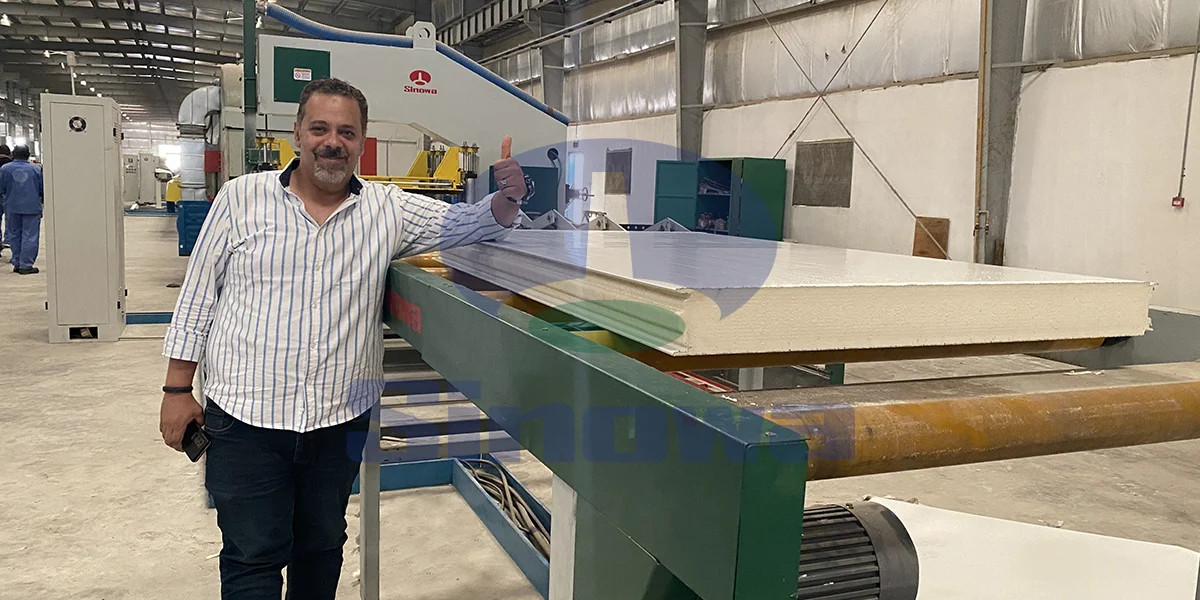
High Quality & High Efficiency
Continuous PU Sandwich Panel Production Line
We are dedicated to the development and manufacture of continuous and discontinuous PU Sandwich Panel Production Line, Fully Automatic PUF / PIR Sandwich Panel Production Line, Polyurethane / Phenolic Insulation Board Production Line, Insulated Rockwool Sandwich Panel Production Line, Mineral Wool Sandwich Panel Production Line and high-speed Cold-bending Roll Forming Line.
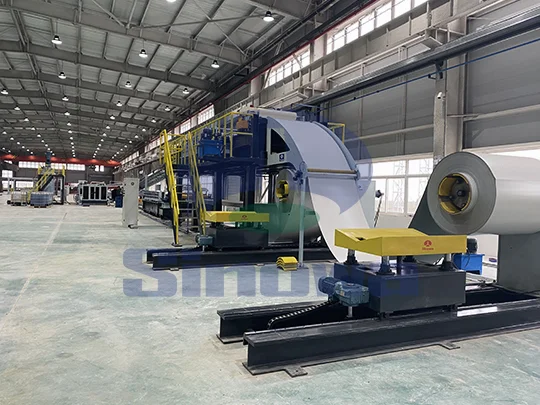
Continuous PU/PIR Sandwich Panel Production Line
Our continuous pu sandwich panel line can easily automate the production of roof sandwich panel, wall sandwich panel, cold storage sandwich panel and other products by different combination and configuration selection and simple switching. The adoption of system integration technology and bus control technology accomplishes the full automatization of integrated and coordinated control of the entire production line with accessible remote interactive communication.View More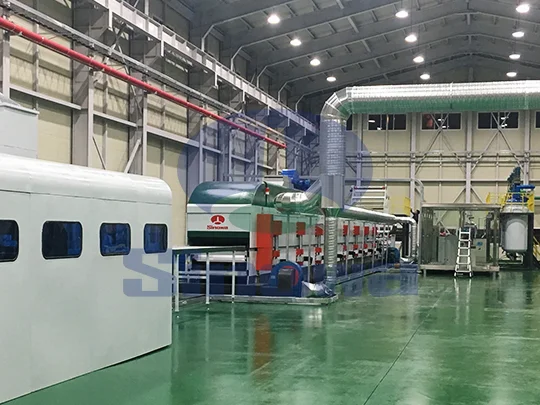
Continuous PU/Phenolic Insulation Board Production Line
Continuous Insulation Panel Production Line of the PU and phenolic aldehyde surface has diversified and multifunctional production characteristics, which may produce products with different specifications such as PU, PF, PIR, etc. The surface material may be aluminum foil, colored steel, cement base cloth, kraft paper, non-woven fabrics, etc. The products are widely applied to such occasions as construction, decoration, pipeline ventilation, subway construction, etc.View More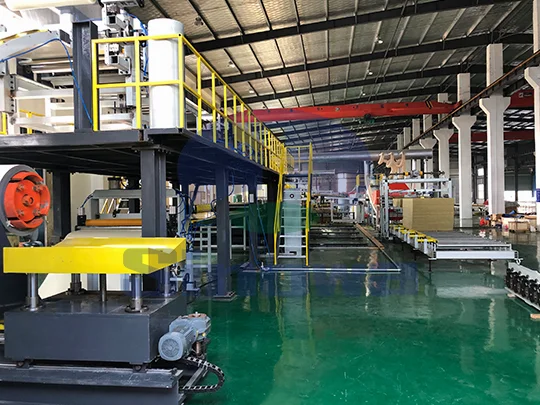
Continuous Rockwool/Mineral Wool Sandwich Panel Production Line
The continuous rock wool sandwich panel line has high adaptability, we may design various products according to the customer’s requirements, including various configurations, so as to meet their demands with flexible price system. The whole mineral wool sandwich panel machine design concept of modularization enables all our components to be integrated and combined at will. The Rockwool Panel Line is used for building exterior wall insulation, fire isolation belt, structural insulation integration, fireproof, and so on.View More
PIR Sandwich Panel Line
A PIR sandwich panel line is a highly integrated and automated industrial system designed to produce composite sandwich panels with polyisocyanurate as the core material. It realizes seamless and continuous production from raw material input to finished product output, integrating multiple functional processes to ensure efficiency and consistency. The production process typically starts with the pretreatment of surface materials, which are smoothed and preheated to enhance adhesion with the core. The PIR foam, mixed with eco-friendly blowing agents and additives, is then injected between two surface layers, where it expands and cures to form a solid, uniform core. This entire process is controlled by an intelligent system that monitors parameters such as foam density and panel thickness, minimizing human intervention and reducing defects. The line features modular design, allowing flexible switching between different panel specifications and thicknesses to meet diverse project needs. It is also energy-efficient, adopting technologies that lower energy consumption compared to traditional production methods. The panels produced by this line have excellent thermal insulation, fire resistance and structural stability, making them widely applicable in various fields such as industrial buildings, cold chain logistics, commercial structures and fire-proof partitions. This advanced production line plays a vital role in promoting the development of energy-saving and high-performance building materials, adapting to the growing demand for sustainable and efficient construction solutions.PUR Sandwich Panel Production Line
A PUR sandwich panel production line is an advanced automated industrial system designed for the continuous manufacturing of composite insulation panels, integrating mechanical, electronic, and chemical technologies to ensure efficiency and consistency. The production process starts with the pretreatment of surface materials, which are usually metal sheets or non-metallic fabrics, unwound and formed into the desired shape by automatic unwinding and forming units. These materials then undergo surface treatment to enhance adhesion, ensuring a firm bond with the core layer. Next, the high-pressure mixing system precisely injects the two-component raw materials of PUR foam into the gap between the upper and lower surface materials, which are then sent to a double-track laminating machine for foaming and curing under controlled temperature and pressure. After the foam is fully cured, the continuous panel is cut into the required length by a high-precision servo-driven cutting system, and the finished products are automatically stacked for subsequent processing. This production line boasts high flexibility, supporting quick switching of core material types and compatible with various surface layers, while achieving full automation from raw material feeding to finished product stacking. The panels produced have excellent performance such as thermal insulation, sound insulation, and light weight, widely used in industrial plants, cold chain logistics, integrated housing, and other fields. Compared with traditional manual production, it greatly improves production efficiency, reduces labor intensity, and ensures stable product quality with minimal material waste.Fully Automatic PU Sandwich Panel Production Line
A fully automatic PU sandwich panel production line is an integrated intelligent system that combines mechanical, electronic, and chemical technologies to realize continuous and efficient production of polyurethane sandwich panels. It minimizes manual intervention through streamlined workflows, ensuring stable and consistent product quality throughout the entire manufacturing process. The production line consists of several closely coordinated functional modules, including uncoiling, forming, foaming, composite, cutting, and stacking systems, which work together to complete the entire process from raw material input to finished product output. The uncoiling system ensures the smooth unwinding of surface materials, while the forming system processes flat coils into the required shapes with high precision. The foaming system injects and mixes PU raw materials evenly, creating a core with excellent thermal insulation performance, and the composite system tightly bonds the surface materials with the PU core to form a solid structure. Compared with traditional manual production methods, this automatic line offers significant advantages such as higher production efficiency, lower labor intensity, and better raw material utilization. The panels produced are widely used in various fields, including modular buildings, cold storage facilities, agricultural greenhouses, and industrial equipment shells, thanks to their excellent thermal insulation, soundproofing, and waterproof properties. The intelligent control system of the production line allows for flexible adjustment of production parameters, adapting to different specifications and requirements of PU sandwich panels, thus meeting the diverse needs of modern construction and industrial applications.Mineral Wool Sandwich Panel Line
A mineral wool sandwich panel line is a set of integrated equipment designed for continuous and efficient production of composite panels with a mineral wool core and metal facings. It combines multiple mechanical and electrical processes to ensure consistent product quality and high production efficiency throughout the manufacturing process. The line typically consists of several key functional units, including uncoiling systems that stably feed metal coils, roll forming units that shape the metal into desired profiles, mineral wool feeding systems that cut and convey the core material, adhesive application systems that bond the layers together, laminating and pressing units that form the sandwich structure, and cutting systems that trim panels to preset sizes. The entire production process is precisely controlled by an intelligent system, which minimizes manual intervention and ensures smooth coordination between each unit. Mineral wool, the core material, is known for its excellent fire resistance, thermal insulation, and sound absorption properties, making the panels produced by this line widely applicable in various fields. These panels are commonly used in industrial buildings, commercial structures, residential housing, cold storage facilities, and agricultural barns, providing effective thermal comfort, noise reduction, and fire protection. The line’s modular design allows for flexible adjustment to produce different types of panels, adapting to diverse design requirements and application scenarios. With its high automation level, it not only improves production efficiency but also reduces material waste, making it a reliable and sustainable solution for modern construction and industrial needs.Rock Wool Sandwich Panel Production Line
The rock wool sandwich panel production line is an integrated automated system that transforms raw materials into high-performance composite panels through a series of continuous and precise operations. It combines mechanical engineering, electrical control, and material processing technology to achieve efficient and consistent production, eliminating the inefficiencies and quality inconsistencies of traditional manual or semi-automatic methods. The production process typically starts with the handling of surface materials, which are uncoiled and leveled to ensure flatness and stability before moving to the next stage. Meanwhile, rock wool core materials are processed through slitting and shaping, with fiber direction optimized to enhance the final panel’s structural strength and thermal insulation performance. A precision glue application system then uniformly coats the inner surface of the facing materials, ensuring strong bonding between the surface layers and the rock wool core. The composite structure is then pressed and cured under controlled temperature and pressure to form a firm, integrated panel, followed by automatic cutting to the required dimensions and stacking for subsequent use. These production lines are highly flexible, capable of adjusting parameters to produce panels of different thicknesses and specifications, meeting the diverse needs of construction projects such as industrial workshops, warehouses, and residential buildings. With high automation, they reduce labor input while ensuring stable product quality, making them an essential part of the modern construction materials manufacturing industry.Insulated Sandwich Panel Line
An insulated sandwich panel line is a set of integrated industrial equipment designed for continuously manufacturing insulated sandwich panels, which are widely applied in construction, logistics, industrial facilities and other fields. This production line combines multiple functional systems to realize automated and efficient production, reducing manual intervention and ensuring consistent product quality. It usually consists of feeding, forming, bonding, curing, cutting and packaging systems, each playing a vital role in the whole production process. The production starts with feeding raw materials, including outer facing materials and insulation core materials such as rock wool, polyurethane or glass wool, which are then processed and transported to the forming system. In the bonding process, the core material is firmly attached to the outer layers under controlled temperature and pressure, ensuring strong adhesion and structural stability. After forming, the panels go through a curing process to enhance their performance, followed by precise cutting according to required specifications. The final step is packaging to protect the finished panels during transportation and storage. This production line features high efficiency, energy saving and environmental friendliness, as it adopts automated technology to reduce energy consumption and can utilize recyclable raw materials. The insulated sandwich panels produced have excellent thermal insulation, sound insulation, fire resistance and lightweight properties, meeting the diverse needs of modern construction and industrial development. With the increasing emphasis on energy conservation and environmental protection, the insulated sandwich panel line is becoming more and more important in promoting sustainable development in related industries.Glass Wool Sandwich Panel Production Line
A glass wool sandwich panel production line is an integrated automated system designed to manufacture high-performance building panels with excellent thermal insulation and sound absorption properties. It combines glass wool as the core material with outer metal sheets through a series of streamlined processes, ensuring consistent quality and efficient production. The entire line operates continuously, from raw material preparation to final product packaging, minimizing manual intervention and reducing material waste. First, the outer metal sheets are uncoiled and leveled, then cleaned to remove surface impurities that might affect bonding. Meanwhile, glass wool core material is cut to the required thickness and density by automatic cutting equipment, ensuring uniform structure and stable performance. Next, a high-performance adhesive is evenly applied to the metal sheets, and the glass wool core is precisely positioned between the two layers before being pressed and bonded by a double-belt pressing system. The pressing process uses precise temperature control to enhance adhesion, preventing peeling and ensuring the panel’s overall mechanical strength. After compounding, the panels are cut into customized lengths by a CNC cutting system, which maintains high precision without damaging the structure. Finally, the finished panels are automatically stacked and packaged for transportation. This production line is widely applied in manufacturing panels for industrial plants, warehouses, cold storage, and other buildings, meeting the growing demand for energy-saving and fire-resistant building materials. Its automated design improves production efficiency while ensuring the panels’ excellent insulation, soundproofing, and fire-resistant performance, making it an essential equipment in modern building material manufacturing.Continuous Sandwich Panel Production Line
A continuous sandwich panel production line is a highly automated industrial system designed for the mass production of high-quality composite sandwich panels, which are widely used in modern construction and related fields. This integrated production system realizes seamless operation from raw material feeding to finished product stacking, minimizing manual intervention and maximizing production efficiency. The production process starts with the uncoiling of surface materials, which are smoothly fed into the line through professional feeding equipment, followed by surface cleaning and pretreatment to ensure better adhesion with the core material. Next, the surface materials are formed into the desired shape through a series of rolling processes, and then sent to the foaming zone where core materials such as polyurethane or rock wool are precisely injected between the upper and lower surface layers. Under controlled temperature and pressure conditions, the core material undergoes foaming and curing to form a firm and uniform sandwich structure. After curing, the continuous panel is cut into set lengths by a high-precision cutting system, and the finished products are automatically stacked and prepared for subsequent processing. This production line features high flexibility, allowing for quick adjustment of parameters to produce panels of different thicknesses and specifications to meet diverse application needs. It also boasts stable product quality, with precise control over dimensions and material properties, making the produced sandwich panels lightweight, high-strength, and excellent in thermal insulation and sound insulation, suitable for industrial plants, cold storage, commercial buildings and other scenarios.Color Steel Sandwich Panel Production Line
A color steel sandwich panel production line is an integrated automated system designed for mass-producing high-quality composite panels widely used in modern construction. It transforms the traditional manual production process into a continuous, efficient, and precise operation, significantly reducing human intervention and improving product consistency. The production line consists of several coordinated functional modules, including unwinding, forming, gluing, foaming, compounding, cutting, and stacking, forming a complete closed-loop production process. The unwinding system gently unrolls color steel coils, equipped with correction devices to ensure the plates are flat and properly aligned during transportation. Next, the forming unit uses multiple sets of rollers to press the flat steel plates into desired shapes, which can be easily adjusted to produce different styles such as corrugated or flat panels without stopping the machine. The core part of the line is the compounding system, where high-pressure foaming technology bonds the color steel plates with insulation core materials like polyurethane, rock wool, or glass wool. Precise temperature and pressure control ensure strong adhesion between the surface plates and the core, enhancing the panel’s overall performance. After compounding, the automatic cutting system precisely cuts the panels to preset lengths, with high accuracy to avoid dimensional deviations. Finally, the stacking device neatly arranges the finished products, preparing them for subsequent storage or transportation. This production line is highly adaptable, capable of producing panels of various thicknesses and widths to meet diverse construction needs, such as industrial workshops, cold storage, and public buildings. Its automated operation not only boosts production efficiency but also ensures stable product quality, making it an essential equipment in the modern building materials manufacturing industry.Automatic Sandwich Panel Production Line
An automatic sandwich panel production line is an advanced integrated system designed to realize continuous and efficient manufacturing of sandwich panels, which are widely used in various fields due to their excellent performance. This production line integrates multiple functional processes into a seamless workflow, from raw material feeding to finished product stacking, eliminating the need for excessive manual intervention and greatly improving production efficiency. The whole production process is controlled by an intelligent system, which ensures stable and consistent product quality, avoiding the errors caused by traditional manual or semi-automatic operation. The line can flexibly adapt to different types of core materials, such as polyurethane, rock wool and glass wool, as well as various surface materials, meeting diverse production needs. It usually consists of automatic feeding devices, pre-processing units, core material filling systems, hot pressing forming equipment, high-precision cutting machines and automatic stacking devices. These components work in coordination to complete each production link efficiently, allowing the line to operate continuously for a long time. The sandwich panels produced by this line have the characteristics of light weight, high strength, thermal insulation and soundproofing, which are widely applied in construction, cold chain logistics, industrial plants and modular buildings. By optimizing the production process and intelligent control, the automatic production line not only reduces labor costs, but also improves production stability and product qualification rate, becoming an indispensable core equipment in the modern sandwich panel manufacturing industry.PUF Sandwich Panel Production Line
A PUF sandwich panel production line is an integrated automated system designed for the continuous manufacturing of composite panels with a polyurethane foam core bonded between two facing materials, usually metal sheets. This production system combines mechanical, chemical, and electrical control technologies to achieve seamless and efficient production from raw material input to finished product output. The entire process involves several interconnected stages that work in harmony to ensure consistent product quality and high production efficiency. First, the facing materials are fed into the line through an uncoiling system, which ensures smooth and stable feeding while preventing material distortion. The materials then go through a preheating process to enhance the bonding strength between the facing sheets and the foam core. Next, the high-pressure foaming system precisely mixes two-component polyurethane raw materials and distributes them evenly onto the bottom facing material. The upper and lower facing materials, along with the foaming mixture, are then conveyed to a laminating system where the foam expands and cures under controlled temperature and pressure conditions. After curing, the formed panels are cut to the required length by an automatic cutting system, followed by cooling treatment to improve structural stability. The production line features a high degree of automation, minimizing manual intervention and ensuring uniform thickness and surface flatness of the finished panels. These panels have excellent thermal insulation, sound insulation, and flame retardant properties, making them widely used in industrial plants, cold storage facilities, commercial buildings, and residential constructions. The production line can be flexibly adjusted to produce panels of different specifications, meeting diverse market demands while adhering to energy-saving and environmental protection requirements.Fully Automatic PU Sandwich Panel Line
A fully automatic PU sandwich panel line is an advanced integrated production system that combines mechanical engineering, automation control, and material science to produce high-quality composite panels efficiently. It realizes continuous and unmanned operation from raw material feeding to finished product stacking, greatly reducing manual intervention and improving production consistency. The production process starts with the uncoiling of surface materials, which are usually metal sheets, and then goes through leveling and preheating to ensure better adhesion with the core layer. Next, the high-pressure foaming system accurately mixes and injects polyurethane raw materials between the two surface layers, where the materials undergo a chemical reaction to form a uniform and dense foam core. The composite panels then enter the pressing and curing zone, where constant temperature and pressure are maintained to ensure the foam core is fully cured and firmly bonded to the surface layers. After curing, the automatic cutting system trims the panels to the required length without stopping the production line, ensuring high cutting precision and efficiency. This production line features strong adaptability, capable of producing panels of different thicknesses and specifications by adjusting parameters, and it supports 24-hour uninterrupted operation with low energy consumption and material waste. The PU sandwich panels produced are widely used in industrial plants, cold storage facilities, prefabricated buildings and commercial venues, thanks to their excellent thermal insulation, soundproofing and structural stability. With its high efficiency, precision and intelligence, the fully automatic PU sandwich panel line has become an indispensable equipment in the modern building material manufacturing industry.Continuous PUF Sandwich Panel Production Line
The continuous PUF sandwich panel production line is a highly integrated automated manufacturing system designed for the streamlined mass production of polyurethane foam sandwich panels, which are widely applied in construction insulation, industrial factory enclosures, cold chain facilities, and portable building fields. This integrated production equipment integrates mechanical transmission, chemical foaming, constant temperature curing, precise molding and intelligent control technologies, realizing uninterrupted one-stop production from raw material feeding to finished product stacking. Different from traditional intermittent production equipment, the continuous production mode eliminates frequent startup and shutdown operations, effectively reducing production gaps and quality fluctuations. The whole production process is completed through coordinated operation of multiple functional modules, ensuring that each produced panel features uniform thickness, stable bonding performance and excellent thermal insulation effects. With high automation, stable operation and strong production capacity, this production line has become the core equipment for modern large-scale sandwich panel manufacturing, meeting the growing market demand for high-efficiency and high-quality insulation building materials.Continuous PUR Sandwich Panel Production Line
The continuous PUR sandwich panel production line represents an advanced integrated manufacturing system tailored for the automated and uninterrupted production of polyurethane rigid foam sandwich panels. It integrates multiple core processing modules into a streamlined linear production workflow, realizing full-process automated operation from raw material pretreatment, synchronous feeding, precise foaming, composite pressing, constant-temperature curing to fixed-length cutting and finished product finishing. Different from traditional intermittent production equipment, this continuous production mode eliminates frequent equipment start-stop, manual material switching and process debugging, achieving stable, high-efficiency and low-consumption panel manufacturing. With intelligent linkage control among all functional units, the production line maintains consistent processing parameters throughout operation, effectively ensuring uniform product structure, stable bonding performance and reliable overall quality. Widely adaptable to diversified production demands of building insulation, purification engineering and industrial enclosure panels, it has become the core equipment for modern large-scale sandwich panel manufacturing, balancing production efficiency, product precision and operational stability perfectly.Insulation Panel Production Line
The insulation panel production line is an integrated, automated industrial system dedicated to the mass manufacturing of high-performance thermal insulation panels widely applied in construction, cold chain logistics, industrial manufacturing and energy-saving engineering fields. This streamlined production system integrates raw material processing, composite molding, constant-temperature curing, precision cutting and surface finishing into one continuous workflow, realizing efficient and standardized production of various insulation panel products. Adopting modular mechanical structure and intelligent control technology, the production line can adapt to multiple core insulation materials including polyurethane, polyisocyanurate and rock wool, and flexibly adjust product specifications such as panel thickness and surface styles. By optimizing every production link, the system effectively improves product uniformity and structural stability, while reducing manual intervention and production consumption. As a core equipment system for energy-saving building material production, it lays a solid foundation for the large-scale promotion and application of thermal insulation and energy-saving building materials in modern industrial and civil construction scenarios.PIR Sandwich Panel Production Line
A PIR sandwich panel production line is a highly integrated and automated industrial system designed to manufacture composite sandwich panels with polyisocyanurate as the core material. It combines mechanical engineering, materials science and automation control technologies to realize continuous and efficient production from raw material input to finished product output. The production process starts with the pretreatment of facing materials, usually thin-gauge metal sheets, which are uncoiled, leveled and preheated to ensure good adhesion with the core material. Next, the PIR foam mixture, made by mixing polyisocyanurate with eco-friendly blowing agents and additives, is injected between two layers of preprocessed facing materials through a high-pressure foaming system. The mixture expands and cures under precisely controlled temperature and pressure conditions, forming a dense and stable core with excellent thermal insulation and fire-retardant properties. After foaming, the composite panel goes through forming, cooling and precision cutting processes to meet different size requirements, followed by stacking for storage and transportation. These production lines adopt modular design, allowing flexible switching between different panel specifications and types, while the intelligent control system realizes parameter linkage and fault self-diagnosis, reducing labor costs and ensuring product consistency. The panels produced are widely used in building enclosure systems, cold chain logistics, industrial factories and other fields that require high fire prevention and insulation performance, contributing to energy conservation and sustainable development in the construction industry.Sandwich Panel Production Line
A sandwich panel production line is a fully automated system designed for the continuous manufacturing of composite sandwich panels, which are widely used in modern construction and other related fields. These panels consist of a lightweight core material sandwiched between two layers of rigid facing materials, offering excellent thermal insulation, soundproofing, and structural strength. The production line integrates multiple seamless processes, from raw material feeding to finished product stacking, ensuring efficiency and consistency throughout the manufacturing process. The workflow typically starts with the unwinding and leveling of facing materials, which are then guided through a series of rollers to ensure flatness and proper alignment. Next, a specialized adhesive is evenly applied to the facing materials, preparing them for bonding with the core material—commonly materials like expanded polystyrene, polyurethane, or rock wool. The core material is then precisely placed between the two facing layers, and the entire assembly is passed through a pressing system under controlled temperature and pressure to form a strong, uniform bond. After bonding, the continuous panel is cut into desired lengths using high-precision cutting equipment, ensuring accurate dimensions and neat edges. This automated production line minimizes human error, reduces material waste, and enables large-scale production while maintaining consistent product quality. The flexibility of the line allows for adjustments to produce panels of different thicknesses and sizes, catering to diverse application needs in industrial plants, commercial buildings, cold storage facilities, and residential constructions. As the demand for energy-efficient and durable building materials grows, the sandwich panel production line plays an increasingly important role in providing reliable, high-performance solutions for modern construction projects.Polyurethane Sandwich Panel Machine
A polyurethane sandwich panel machine is a sophisticated and automated piece of equipment designed for the continuous production of high-quality composite panels, which consist of a polyurethane foam core sandwiched between two outer facings. This equipment plays a vital role in meeting the growing demand for energy-efficient and durable building materials across various industries. It operates through a series of coordinated processes, starting with the uncoiling and pretreatment of facing materials, followed by precise mixing and injection of polyurethane foam, and ending with curing and cutting to the desired dimensions. The automated system ensures consistent panel quality, with precise control over foam density and bonding between the core and outer layers, eliminating the inconsistencies often associated with manual production. These machines are highly versatile, capable of handling different types of facing materials and producing panels of varying thicknesses to suit diverse application needs, such as industrial warehouses, cold storage facilities, commercial buildings, and modular constructions. By minimizing manual intervention, they enhance production efficiency, reduce material waste, and lower overall operational costs. The panels produced by these machines offer excellent thermal insulation, structural strength, and soundproofing properties, making them an ideal choice for modern construction projects focused on sustainability and energy conservation. With their reliable performance and adaptability, polyurethane sandwich panel machines have become an indispensable asset for manufacturers aiming to produce high-performance composite panels efficiently.Polyurethane Sandwich Panel Line
A polyurethane sandwich panel line is a highly automated production system designed to manufacture composite panels with a polyurethane foam core sandwiched between two outer facings, integrating multiple processes into a seamless workflow. The production process starts with feeding the outer facing materials into the line, which can be metal sheets, non-woven fabrics or other suitable materials, followed by preheating to ensure better adhesion with the core material. The two-component raw materials of polyurethane are then delivered to the mixing head at a precise ratio by metering pumps, mixed evenly, and uniformly distributed onto the lower facing material. Meanwhile, the upper facing material is fed into the double-track laminating conveyor, where the polyurethane foam undergoes foaming and solidification between the two layers of facing materials. After full curing, the composite panel is cut into the required length by a cutting system without interrupting the continuous production process. This production line features high efficiency, as it can operate continuously for long periods, significantly increasing output compared to discontinuous production methods. It also ensures stable product quality through real-time monitoring and adjustment of process parameters, resulting in panels with uniform foam density, strong structural strength and excellent thermal insulation performance. The panels produced by this line are widely used in various fields, including industrial plants, cold storage facilities, logistics warehouses, prefabricated houses and exterior wall insulation, due to their lightweight, fire resistance, moisture resistance and sound insulation properties. With its modular design, the line can be flexibly adjusted to produce panels of different specifications, meeting the diverse needs of different application scenarios while reducing material waste and labor costs.Mineral Wool Sandwich Panel Production Line
A mineral wool sandwich panel production line is an integrated automatic system designed for continuous and efficient manufacturing of composite panels with a mineral wool core and outer facing materials. It combines mechanical, electrical, and hydraulic technologies to ensure seamless coordination between each production stage, from raw material feeding to finished product stacking. The line operates with high automation, relying on intelligent control systems that allow operators to set parameters and monitor the entire process without constant manual intervention, significantly reducing labor requirements while improving consistency. The production process typically starts with the unwinding and shaping of outer facing materials, followed by the precise feeding and cutting of mineral wool core materials. Adhesive is evenly applied to ensure strong bonding between the core and facing layers, which are then pressed together under controlled temperature and pressure to form a solid structure. A non-stop cutting system trims the panels to preset sizes, ensuring dimensional accuracy and minimizing material waste. These production lines are highly adaptable, capable of adjusting to different panel thicknesses and specifications to meet diverse application needs. The mineral wool panels produced are known for excellent thermal insulation, fire resistance, and sound absorption, making them widely used in construction, industrial facilities, and cold storage. With compact process layout and energy-saving features, the production line balances high efficiency with environmental friendliness, supporting the demand for sustainable and high-performance building materials in modern industries.Rockwool Sandwich Panel Production Line
The rockwool sandwich panel production line is a sophisticated integration of mechanical, electrical, and material processing technologies, designed to realize efficient and continuous manufacturing of high-performance sandwich panels. It streamlines the entire production process from raw material input to finished product stacking, minimizing human intervention and ensuring consistent product quality. The production process typically starts with the uncoiling of surface materials, usually metal coils, which are fed into a roll forming unit to be shaped into desired profiles through a series of precisely designed rollers. Meanwhile, the rockwool core material is processed, cut to appropriate thickness, and evenly laid between the two surface layers. An adhesive application system ensures strong bonding between the core and surface layers, followed by a composite pressing process that enhances the panel’s structural stability and density. The final step involves cutting the continuous panel into preset lengths and stacking them neatly for subsequent transportation. This production line boasts high automation, allowing for flexible adjustment of parameters to produce panels of different specifications, adapting to diverse needs in industrial warehouses, commercial buildings, and prefabricated residences. Its efficient design not only improves production capacity but also ensures the panels retain excellent properties such as fire resistance, thermal insulation, and sound absorption, making it an essential equipment in the modern construction material industry.PU Sandwich Panel Line
A PU sandwich panel line is an advanced automated production system designed to manufacture composite panels with a polyurethane foam core bonded between two facing materials, enabling efficient and large-scale production. This integrated line combines multiple sequential processes into a seamless operation, eliminating the inefficiencies of traditional manual or semi-automatic methods. The production process typically starts with the uncoiling and feeding of facing materials, which are then shaped into desired profiles before the precise mixing and injection of PU foam between them. The foam expands and cures as it moves through the line, forming a strong bond with the facing materials to create a monolithic structure that offers excellent thermal insulation, structural strength, and durability. These lines are highly versatile, capable of producing panels for various applications, including industrial warehouses, cold storage facilities, commercial buildings, and prefabricated constructions. They reduce labor costs significantly due to their automated operation, while ensuring consistent product quality and minimizing material waste. The panels produced by these lines are lightweight yet robust, providing superior energy efficiency by reducing heat transfer, making them ideal for environments with extreme temperature variations. With modular components, the line can be adjusted to produce panels of different specifications, catering to the diverse needs of modern construction and manufacturing industries without compromising on performance or efficiency.PU Sandwich Panel Machine
In the modern construction and manufacturing industries, the demand for efficient and high-performance building materials has promoted the continuous development of production equipment, among which the pu sandwich panel machine plays an indispensable role. This specialized equipment is designed to realize the continuous and automated production of pu sandwich panels, which are composed of two outer facing materials and a polyurethane foam core, combining the strength of the facing materials with the thermal insulation, soundproofing and lightweight properties of the pu core. Unlike traditional manual or semi-automatic production methods, the pu sandwich panel machine integrates multiple processes such as raw material feeding, foam mixing, lamination, pressing and cutting, forming a seamless production workflow that greatly improves production efficiency. It ensures consistent product quality by reducing human errors, with precise control over panel dimensions and foam density, making the produced panels suitable for a wide range of applications including industrial workshops, warehouses, cold storage facilities and residential buildings. The machine is also highly versatile, capable of adjusting production parameters to produce panels of different sizes and thicknesses to meet diverse project needs. Its automated operation not only reduces labor intensity but also optimizes raw material utilization, contributing to more economical and environmentally friendly production. With its reliable performance and efficient workflow, it has become a key equipment in the production of high-quality pu sandwich panels, supporting the development of the modern construction industry.Continuous PU Sandwich Panel Line
A continuous PU sandwich panel line is an advanced automated production system designed for the seamless manufacturing of PU sandwich panels, integrating multiple functional modules to achieve efficient and consistent production. Unlike traditional discontinuous production methods, it operates without interruption from raw material feeding to finished product stacking, minimizing manual intervention and maximizing production continuity. The core process involves precise coordination of several key stages, starting with the uncoiling of surface materials, which are fed into the line at a steady speed with tension control to prevent deformation. These surface materials, often metal sheets or non-woven fabrics, are then preprocessed to ensure optimal adhesion with the PU foam core. Next, two-component PU raw materials are accurately metered and mixed at high pressure before being evenly poured between the upper and lower surface layers. As the materials move through the double-track laminating conveyor, the PU foam expands and cures, forming a strong bond with the surface layers. The cured panels are then automatically cut to the required length, completing the production cycle. This integrated line not only significantly improves production efficiency but also ensures uniform product quality, with consistent core density and bonding strength. The panels produced are widely used in various fields, including construction for walls and roofs, cold storage and cold chain logistics for insulation, and industrial facilities for soundproofing and thermal protection, thanks to their excellent insulation, structural stability, and lightweight properties. With its energy-saving design and flexible adaptability, the continuous PU sandwich panel line has become an indispensable equipment in modern composite material production, meeting the diverse needs of different industries.Polyurethane Sandwich Panel Production Line
A polyurethane sandwich panel production line is a highly automated and continuous industrial system designed to manufacture composite panels with a rigid polyurethane foam core and outer facings, which can be metal, non-metallic or other structural materials. This integrated production system combines multiple processes into a seamless workflow, ensuring high efficiency, consistent quality and strong adaptability to diverse production needs. The production process typically starts with the uncoiling and pretreatment of facing materials, where coiled raw materials are smoothly unrolled, leveled and cleaned to remove contaminants, enhancing the bonding strength between the facing and the core. Next, the polyurethane raw materials, including polyol and isocyanate, are accurately metered by a pump system and mixed uniformly in a mixing head before being evenly poured onto the bottom facing material. The bottom facing with the mixed raw materials and the upper facing are then conveyed together into a laminating machine, where the polyurethane foam undergoes a controlled foaming and curing process under stable temperature and pressure conditions, forming a firm bond with the two outer layers. After full curing and forming, the composite panel is trimmed on both sides and cut into the required length by an automatic tracking cutting machine to ensure dimensional accuracy. These production lines feature high automation, which significantly reduces manual intervention and human error, while also allowing flexible adjustment to produce panels of different specifications and thicknesses. The panels produced by this line are widely used in industrial plants, logistics warehouses, integrated house enclosures, external wall insulation and cold storage facilities, thanks to their excellent thermal insulation, soundproofing and structural stability. The continuous operation of the production line not only improves production efficiency but also minimizes material waste, making it an essential equipment in the modern building material manufacturing industry.PU Sandwich Panel Production Line
A PU sandwich panel production line is an integrated automated system that combines mechanical, electronic, and chemical technologies to realize continuous production of high-performance composite panels. These panels consist of two outer facing materials and a middle polyurethane foam core, which are widely used in construction, cold chain logistics, industrial insulation and other fields due to their excellent thermal insulation, sound insulation, structural stability and lightweight properties. The entire production process is highly automated, minimizing manual intervention and ensuring consistent product quality. The production line starts with the uncoiling of surface materials, which are then leveled and preheated to enhance the bonding effect with the core material. Meanwhile, polyurethane raw materials are accurately mixed in a specific ratio by a metering system and evenly sprayed on the bottom surface material through a distribution device. Then the upper surface material is covered synchronously, and the three-layer structure enters a double-track press, where the polyurethane foam fully foams and cures under controlled temperature and pressure to form a firm bond. After curing, the continuous panel is cut into the required length by an automatic cutting system, and then conveyed to the finishing area for sorting and stacking. This production line not only improves production efficiency significantly compared with traditional manual methods but also optimizes material utilization, reducing waste. It can flexibly adjust production parameters to produce panels of different specifications and types, meeting diverse market demands. With the continuous development of green building and energy-saving industries, such production lines are constantly optimized to be more energy-efficient and environmentally friendly, providing strong support for the high-quality development of related fields.Sandwich Panel Machine
A sandwich panel machine is a specialized integrated industrial equipment designed for the continuous automated production of composite sandwich panels, which are widely applied in modern construction, industrial manufacturing, cold chain storage, and portable building industries. This sophisticated production line integrates multiple independent functional modules to complete the entire panel manufacturing process from raw material processing to finished product shaping and cutting. Different from traditional single-function processing equipment, it realizes streamlined and synchronous operation of material feeding, surface plate forming, adhesive coating, core material laying, composite pressing, constant-temperature curing, and fixed-length cutting. The machine focuses on producing lightweight, high-strength, heat-insulating, and soundproof composite panels with stable structural performance and uniform product quality. With the upgrading of industrial manufacturing technology, modern sandwich panel machines have achieved a high degree of automation and intelligent control, effectively reducing manual intervention, improving production efficiency, and lowering comprehensive production costs. They have become core supporting equipment for the mass production of energy-saving building materials, adapting to the growing market demand for high-performance composite panels in green building and industrial enclosure fields.Sandwich Panel Line
A sandwich panel line is a fully integrated, continuous manufacturing system designed for the mass production of composite sandwich panels, which are widely applied in modern construction, industrial enclosure, cold storage facilities and portable building structures. This automated production system integrates multiple interconnected functional modules to complete the whole panel manufacturing process from raw material pretreatment to finished product stacking, realizing seamless and efficient one-stop production. Different from discrete manual or semi-automatic processing equipment, the modern sandwich panel line adopts synchronous operation logic for all functional units, effectively eliminating production discontinuity and quality instability caused by segmented processing. It can adapt to diverse core materials and surface layer specifications, delivering composite panels with stable structural integrity, excellent thermal insulation performance and uniform surface flatness. As the core equipment for standardized composite panel production, it optimizes production workflows, reduces unnecessary material waste and manual intervention, and meets the large-scale and high-quality production demands of the modern building materials industry.Continuous Sandwich Panel Line
A continuous sandwich panel line is an advanced automated production system designed to manufacture high-quality composite sandwich panels in an uninterrupted flow, significantly improving production efficiency compared to traditional batch or manual methods. It integrates a series of coordinated processes, starting from the feeding and uncoiling of surface materials, followed by precise forming, preheating, and the uniform injection or placement of core materials such as polyurethane, rock wool, or glass wool between the two surface layers. The entire process is controlled by intelligent systems, ensuring consistent bonding between the surface and core materials, as well as accurate thickness and dimension control throughout production. These production lines feature modular designs, allowing flexible adjustment to produce different types of panels for various applications, including building walls, roofs, cold storage facilities, and clean rooms. The panels produced by this line possess excellent properties such as thermal insulation, sound insulation, fire resistance, and light weight, making them widely used in construction, industrial, and even transportation fields. With energy-saving and environmentally friendly designs, modern continuous sandwich panel lines reduce material waste and energy consumption, while minimizing human interference to ensure stable product quality. They can be customized to meet specific size and performance requirements, adapting to the diverse needs of different projects and promoting the development of efficient and sustainable building materials.PIR Sandwich Panel Machine
A PIR sandwich panel machine is an integrated and automated production equipment designed to manufacture high-performance composite panels with polyisocyanurate as the core material. These machines play a vital role in modern construction by streamlining the production process of panels that offer excellent thermal insulation, fire resistance, and structural integrity. The working process of the machine is a seamless combination of multiple stages, starting with the preparation and feeding of raw materials. The outer facing materials, usually metal sheets, are unwound and leveled to ensure a smooth and uniform surface, while the liquid PIR foam is stored in tanks for easy access. In the foaming system, the PIR foam is mixed with blowing agents and other additives under precise control to form a uniform mixture, which is then injected between the two outer layers. As the mixture expands and cures, it bonds tightly with the outer facings to form a solid sandwich structure. The forming and trimming system then shapes the panel to the desired dimensions, ensuring precision and consistency. These machines feature a high degree of automation, reducing manual intervention and improving production efficiency while maintaining stable product quality. They are highly flexible, allowing for customization of panel thickness and specifications to meet diverse needs in construction fields such as industrial plants, cold storage, and building exterior walls. With energy-saving and environmentally friendly designs, they adopt advanced technologies to reduce energy consumption and minimize harmful emissions, aligning with the trend of sustainable building development. The panels produced by these machines are lightweight yet durable, making them an ideal choice for energy-efficient and safe construction projects worldwide.Rock Wool Sandwich Panel Line
A rock wool sandwich panel line is a highly automated industrial system designed to produce high-performance rock wool sandwich panels, which are widely used in various construction fields due to their excellent properties. The entire production process is seamlessly integrated, from raw material input to finished product output, minimizing manual intervention and ensuring consistent efficiency and quality. The line typically consists of several coordinated modules, including raw material preparation, metal sheet uncoiling and forming, rock wool core distribution, lamination, curing, and precise cutting. These modules work in harmony to transform basic materials into durable, multi-functional sandwich panels. The production line features strong flexibility, allowing operators to adjust parameters to produce panels of different specifications, thicknesses, and surface profiles, meeting the diverse needs of different construction projects. Equipped with advanced exhaust gas treatment and waste recycling devices, it adheres to energy-saving and environmental protection concepts, reducing resource waste and environmental impact. The rock wool sandwich panels produced by this line possess outstanding thermal insulation, fire resistance, and sound absorption performance, making them ideal for industrial warehouses, commercial buildings, civil residences, and other structures. With its high automation, stable product quality, and wide adaptability, the rock wool sandwich panel line plays a crucial role in promoting the modernization and sustainability of the construction material industry.Soundproofing Sandwich Panel Production Line
A soundproofing sandwich panel production line is an automated system designed to manufacture composite panels with excellent acoustic insulation performance, integrating multiple processes to ensure efficiency and product consistency. The line starts with raw material preparation, where surface materials such as steel or aluminum sheets and core materials like rock wool, glass wool, or polyurethane are carefully selected and inspected to meet soundproofing requirements. These materials are then fed into the line through an automatic feeding system, which ensures stable and accurate conveying without manual intervention. The surface materials undergo preprocessing, including cleaning and surface treatment, to enhance adhesion with the core material, a key step in ensuring the overall structural strength and soundproofing effect of the final panels. Next, an adhesive spraying system precisely applies adhesive to the surface materials, controlling the amount to avoid waste and ensure firm bonding. The core material is then placed between two layers of surface materials, and the composite structure is pressed together using hydraulic or pneumatic methods in a composite pressing system, forming a stable sandwich structure. After pressing, the panels go through a curing process, either by heating or room temperature treatment, to make the adhesive reach optimal strength. Finally, an automatic cutting system trims the panels to the required size with high precision, and edge processing is performed to enhance waterproofing and aesthetics. This production line operates continuously, reducing labor costs and improving production efficiency while ensuring that each panel maintains consistent soundproofing performance, making the panels widely applicable in industrial plants, commercial buildings, residential soundproof walls, and other fields where noise reduction is needed.Fully Automatic Rock Wool Sandwich Panel Production Line
A fully automatic rock wool sandwich panel production line is an integrated system that realizes the entire manufacturing process from raw material feeding to finished product stacking without excessive manual intervention. It combines advanced mechanical engineering, electrical control and material processing technology to ensure stable and efficient production of high-quality rock wool sandwich panels. These panels, composed of a rock wool core sandwiched between two protective surface layers, are widely used in various construction projects due to their excellent fire resistance, thermal insulation, sound absorption and structural stability. The production line starts with the automatic feeding of surface materials, usually metal coils, which are uncoiled and formed into the desired profile through a roll forming unit. At the same time, the rock wool core is processed, leveled and cut to the required size by a dedicated system before being accurately transported between the two surface layers. A precision adhesive application unit uniformly applies adhesive to ensure firm bonding between the core and surface layers, followed by a lamination and pressing process that enhances structural integrity. The line is equipped with an automatic cutting system that trims the continuous panel into specified lengths without stopping production, and a stacking system that neatly arranges the finished products. This full automation not only greatly improves production efficiency and reduces labor costs but also ensures consistent product quality, making it an indispensable part of modern building materials manufacturing.Insulated Sandwhich Panel Production Line
Insulated sandwich panel production line is an integrated and automated system that converts raw materials into high-performance insulated panels through continuous and precise processes. It consists of several core modules that work in coordination, covering the entire production cycle from raw material handling to finished product stacking. The production process usually starts with material preparation, where surface materials and core insulation materials are prepared and placed into the feeding system, which transports them stably to the next process with precision control to avoid material waste and contamination. Next, the surface materials are conveyed to the forming section, where they are shaped into the required profiles through precision rollers, while the core insulation materials are evenly distributed between the two surface layers via a dedicated feeding device. The foaming and laminating process is a key link; the mixed foaming materials expand and solidify between the surface layers under controlled temperature and pressure, forming a tight and uniform insulation core that ensures excellent thermal insulation and sound absorption performance. After forming, the continuous panel is cut into the required size by an automatic cutting device, with trimming equipment ensuring neat edges and consistent specifications. This production line features high automation, which greatly reduces manual intervention, improves production efficiency, and ensures stable product quality. The panels produced are widely used in construction, cold chain, industrial workshops and other fields, thanks to their lightweight, high strength, and energy-saving properties. With the development of green and energy-saving concepts, the production line is constantly optimized to be more efficient and environmentally friendly, adapting to diverse market needs.Cold Storage Sandwich Panel Production Line
A cold storage sandwich panel production line is a highly automated integrated system designed to produce high-performance insulation panels specifically for low-temperature storage environments. It realizes seamless connection of the entire production process from raw material feeding to finished product output, significantly improving production efficiency and product consistency without excessive manual intervention. The production process starts with the uncoiling and pretreatment of surface materials, which are usually metal sheets that need to go through leveling and preheating procedures to ensure flatness and enhance bonding with the core material. Next, the core material, such as polyurethane, rock wool or polyisocyanurate, is accurately mixed or laid between the two layers of surface materials through professional equipment. The composite structure is then pressed and cured under controlled temperature and pressure to form a tight bond, preventing problems like delamination or hollowing. After curing, the continuous panel is cut to the required length and automatically stacked, ready for subsequent use. This production line is highly adaptable, allowing flexible adjustment of panel thickness, width and length to meet diverse customization needs. The panels produced have excellent thermal insulation, flame retardant, waterproof and sound insulation properties, widely used in cold chain logistics, food preservation, pharmaceutical storage and other fields, providing reliable material support for energy-saving and stable operation of cold storage facilities. With advanced process control and energy-saving design, it also conforms to the concept of green and sustainable production, reducing energy waste and production costs.Roof Sandwich Panel Production Line
A roof sandwich panel production line is an integrated automated system designed to manufacture high-performance composite panels widely used in modern construction. It operates continuously, transforming raw materials into finished roof panels with minimal manual intervention, ensuring consistency and efficiency throughout the production process. The line typically consists of interconnected subsystems that work in harmony to deliver panels with excellent structural strength, thermal insulation, and durability. The process starts with the uncoiling and preprocessing of surface materials, usually metal coils, which are leveled and trimmed to ensure a smooth, defect-free surface before moving to the next stage. These surface materials are then fed into forming systems, where precision rolling molds gradually shape them into the desired profile, enhancing their structural stability and drainage capacity. Next, the core material, which can be various insulating materials, is processed and evenly distributed between the two surface layers. The composite system is the core part of the line, where the surface layers and core material are firmly bonded together under controlled temperature and pressure, creating a strong and integrated sandwich structure. After bonding, the panels are cut to the required length by high-precision cutting equipment and then cooled and stacked automatically. This advanced production line is widely applied in manufacturing roof panels for industrial plants, warehouses, cold storage facilities, and other buildings, meeting the growing demand for energy-efficient and durable construction materials. Its automated design not only improves production efficiency but also ensures that each panel meets strict quality standards, making it an indispensable part of modern construction manufacturing.Cold Room Sandwich Panel Production Line
The cold room sandwich panel production line is a highly integrated automated system designed to manufacture high-performance insulation panels essential for low-temperature storage and preservation scenarios. It realizes seamless connection from raw material pretreatment to finished product output, forming a continuous and efficient production process without manual segmentation. The entire line operates through close coordination of multiple functional modules, ensuring stable operation and consistent product quality. First, the surface materials are uncoiled and leveled to eliminate internal stress and ensure flatness, then undergo preheating to optimize the bonding effect with the core material. The core part of the production line is the composite forming link, where insulation core materials are evenly laid or injected between two surface layers, and then pressed and cured under precise temperature and pressure control to avoid problems such as hollowing and delamination. After curing, the panels are accurately cut into required sizes by automatic cutting equipment and then automatically stacked, reducing manual intervention and improving production efficiency. This production line has strong flexibility, capable of adapting to different types of surface and core materials, and can flexibly adjust panel thickness and size to meet diverse customization needs. It features energy-saving and durable performance, with wear-resistant components that can operate continuously for a long time while controlling energy consumption. The panels produced are widely used in cold chain logistics, food preservation, agricultural storage and medical cold storage, providing reliable insulation and structural support for various low-temperature environments, and promoting the efficient development of related industries.
Sinowa is a well-known supplier of high-end Phenolic / Polyurethane Sandwich Panel Foam Production Line, and various high-performance cold roll forming machine in China. Our main products include Polyurethane Double-sided Color Steel Sandwich Panel Manufacturing Line, polyurethane and phenolic soft facing insulation panel production line, PU Edge Sealing Rock Wool Panel Production Line, Mineral Wool Sandwich Panel Production Line, Foam Core Sandwich Panel Production Line, and cold roll forming lines.
![PU Sandwich Panel Machine For Roof]()
PU Sandwich Panel Machine For Roof
2026-10-27The demand for efficient, durable, and cost-effective roofing solutions has grown steadily across many construction sectors, pushing manufacturers and contractors to seek reliable equipment that can produce high-quality i…![PUR Sandwich Panel Line Design]()
PUR Sandwich Panel Line Design
2026-10-27The design of a PUR sandwich panel production line begins with a thorough evaluation of the core functional objectives that define the final panel performance and production stability. Every structural and process choice …


- 2026-10-27PUR Sandwich Panel Machine Supplier
- 2026-10-27Rock Wool Sandwich Panel Production Line For Sale
- 2026-10-27Rockwool Sandwich Panel Production Line For Clean Room
- 2026-10-27PIR Sandwich Panel Production Line For Construction
- 2026-10-27Polyurethane Sandwich Panel Machinery Price
- 2026-10-27Polyurethane Sandwich Panel Manufacturing Line For Sale
- 2026-10-27Cheap Rock Wool Sandwich Panel Production Line
- 2026-10-27Glass Wool Panel Production Line Supplier
- 2026-10-26PUF Panel Manufacturing Machine Price
- 2026-10-26PUR Sandwich Panel Machine On Sales
- 2026-10-26Rock Wool Board Production Line For Construction
- 2026-10-26Rock Wool Sandwich Panel Machine For Roof
- 2026-10-26Rockwool Sandwich Panel Production Line Factory
- 2026-10-26Sandwich Panel Line Design
- 2026-10-26Sandwich Panel Making Equipment From China
- 2026-10-26Sandwich Panel Production Machinery For Sale
- 2026-10-26Glass Wool Sandwich Panel Line Manufacturer
- 2026-10-26Fully Automatic Sandwich Panel Making Machine Supplier
- 2026-10-26Custom Continuous Sandwich Panel Manufacturing Line
- 2026-10-26Cheap PUR Sandwich Panel Machine
- Links:
- Sandwich Panel Continuous Production Line
- Automatic and Continuous Sandwich Panel Production Line
- Cheap and Low Price Sandwich Panel Production Line
- China Sandwich Panel Production Line Factory
- Color Steel Sandwich Panel Production Line For Cold Storage
- Continuous Composite Foam Sandwich Panel Production Line
- Continuous Production Line For Rockwool and Mineral Wool Sandwich Panels
- Continuous PU Phenolic Insulation Panel Production Line
- Continuous PU PIR Sandwich Panel Production Line
- Continuous PUF PUR Sandwich Panel Production Line
- Continuous Sandwich Panel Production Line For Roof and Wall
- Customized and Design Sandwich Panel Production Line
- Decorative Sandwich Panel Production Line For Glass Wool Boards
- High Quality Sandwich Panel Production Line For Sale
- Polyurethane(PU) Sandwich Panel Production Line
- Sandwich Panel Production Line Manufacturer and Supplier
- Sandwich Panel Production Machinery and Equipment