
Composite Panel Production Line
Sinowa is a composite panel production line supplier from china, customized high-quality & high efficiency composite panel production line at low price, the adoption of system integration technology and bus control technology accomplishes the full automatization of integrated and coordinated control of the composite panel production line with accessible remote interactive communication. Ranking the first-class level in the world, it is currently the composite panel production line in the market taking a comprehensive lead in high performance.
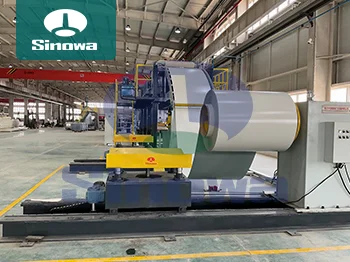
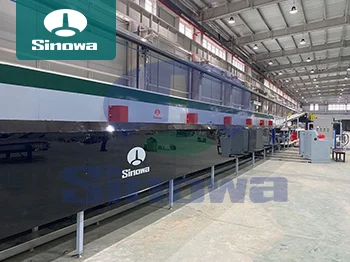
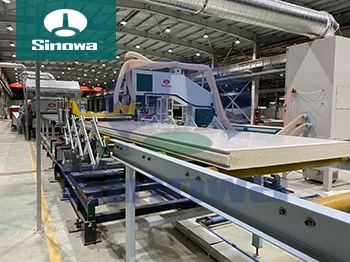
The high-tech composite panel production line can meet a variety of production needs of customers, the whole composite panel production line design concept of modularization enables all our components to be integrated and combined at will. Our high efficiency composite panel production line can easily automate the production of roof sandwich panel, wall sandwich panel, cold storage sandwich panel and other products by different combination and configuration selection and siple switching. The inner core layer can be polyrethane or rock wool, glass wool, an so on.
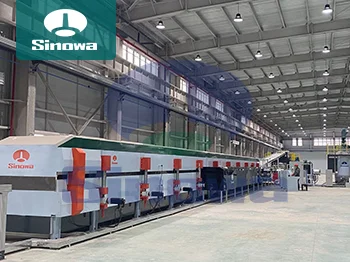
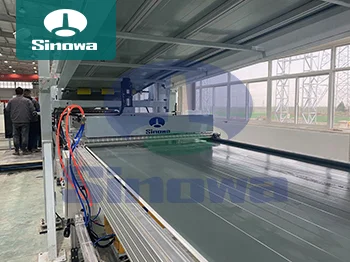
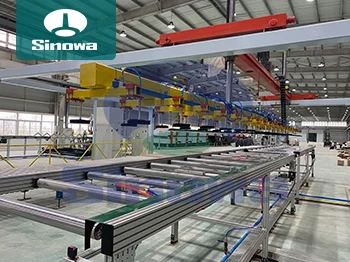
The high precision composite panel production line has high adaptability, which may produce various sandwich panel of the PU, PIR and rock wool systems. We may design various products according to the customer’s requirements, including various configurations, so as to meet their demands with flexible price system. Highly integrated and linked control system centralizes all control points at the main central center, achieving parameter linkage, fault self-diagnosis controlled by the whole line and shipping distance control. High-level automatic control system also saves the manpower and reduces the manpower loss for customers.
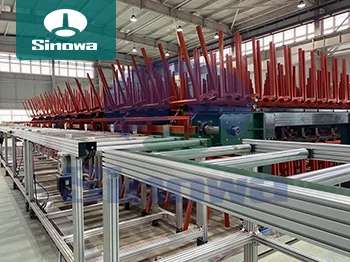
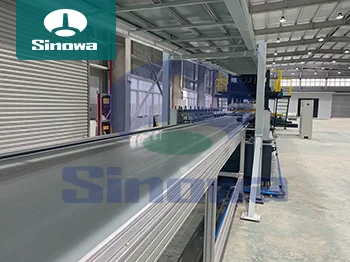
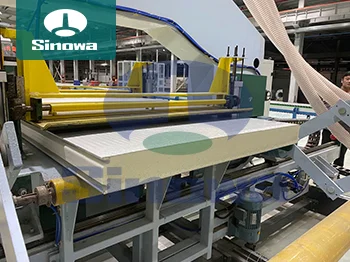
The precision servo hoisting mechanism employed by the main engine without hydraulic system makes the board thickness control flexible and the customer may conveniently change or adjust the board thickness. There will be not such troubles as hydraulic system adjustment, leakage, maintenance, etc.
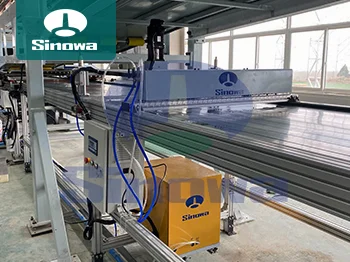
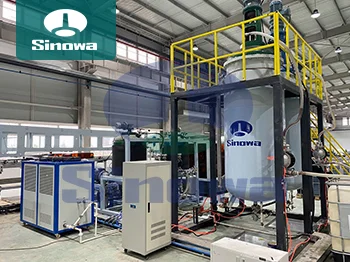
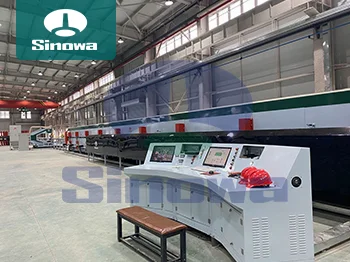
High-level energy saving and protection design makes the whole composite panel production line possible to produce around the clock throughout the year and the customer will save huge budget. In addition, the isolated heat preservation room is constructed for warming the environment. The energy saving and protection design of our manufacturing line may guarantee that the customer’s production line may be freely heated and produce in the main time to save more costs for customers.
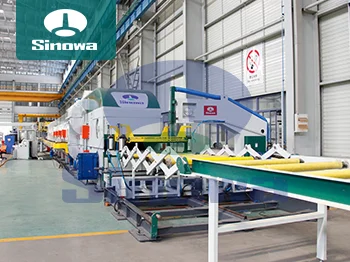
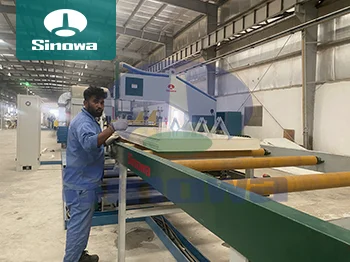
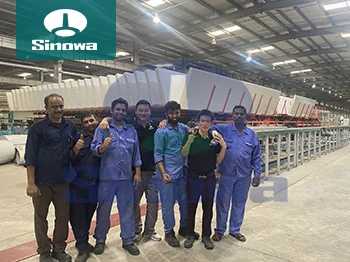
The high-power low-consumption design quickens the reaction of the cheap composite panel production line while energy consumption is kept low. With the brand-new, fully sealed inner insulation design, the energy consumption is controlled at the minimum level to achieve the design objective of less than an hour for the insulation system to be activated from the room temperature above 5℃ to the production process temperature. The energy consumption is only 40% that of those similar products.
A composite panel production line stands as a highly integrated, automated manufacturing system engineered to transform raw sheet materials, core fillers, bonding agents and auxiliary components into finished composite panels with consistent quality and tailored performance. Unlike standalone manufacturing equipment, this production line operates as a seamless, synchronized workflow where every functional module works in tandem to convert loose or semi-finished raw materials into rigid, multi-layer composite panels that combine the advantages of different materials, such as high strength, light weight, thermal insulation, sound absorption and weather resistance. The entire production process eliminates manual handling to the greatest extent possible, relying on precision mechanical transmission, automatic temperature and pressure control, and real-time parameter monitoring to ensure uniformity across each panel produced, making it a core production asset for industries relying on high-performance building materials, decorative panels and industrial structural components. The structural design of the production line is not arbitrary; it is carefully optimized based on the forming principles of composite panels, material characteristics and production efficiency requirements, with each section serving a distinct purpose while maintaining full compatibility with adjacent modules to avoid workflow interruptions or quality deviations.

At its core, the structure of a standard composite panel production line is divided into several interconnected functional segments, each designed to handle a specific stage of the manufacturing process without disrupting the continuous flow of production. The initial segment is the raw material feeding and preparation unit, which is responsible for unwinding, flattening and surface treating the outer facing materials, which can range from metal sheets to non-metallic boards such as fiber cement or plastic-based panels. This unit ensures that the outer skins are completely flat, free of wrinkles, dust or oil stains, as any surface impurity can compromise the bonding strength between the facings and the core material, leading to delamination or reduced service life of the finished panels. Following the feeding unit is the core material processing and distribution segment, which processes loose or semi-rigid core materials into a uniform, dense layer that fits perfectly between the two outer facings. For different core types, this segment varies significantly: for foam cores, it includes a foaming and curing module that controls the expansion rate and density of the foam; for mineral wool or honeycomb cores, it features a cutting and positioning system that ensures the core is laid evenly without gaps or overlapping. The central and most critical part of the entire production line is the laminating and pressing unit, where the outer facings and core material are bonded together under controlled temperature and pressure. This unit uses a series of precision rollers and heating plates to apply consistent pressure across the entire panel surface, ensuring full contact between the adhesive layers and eliminating air bubbles that could weaken the panel structure. After lamination, the panels move through the cooling and shaping segment, which rapidly stabilizes the panel structure, sets the adhesive and reduces the temperature to room level to prevent warping or deformation. The final segment consists of trimming, cutting and surface finishing modules, which cut the continuous panel sheets into standard or custom sizes, smooth the edges and apply optional surface treatments such as texturing or protective coating to meet specific application needs. All these segments are connected by a precision transmission system, usually equipped with variable speed control to match the pace of each module, ensuring that the entire production line runs at a balanced speed without bottlenecks or idle time.
The performance of a composite panel production line is defined by a set of core indicators that directly determine the quality of the finished panels, production efficiency and long-term operational stability, with structural performance being the most foundational aspect. Structural performance refers to the line’s ability to maintain mechanical stability, precision and durability under continuous operating conditions, supporting the weight of raw materials, equipment components and the pressure generated during lamination and pressing. A production line with excellent structural performance features a heavy-duty, rigid frame made of high-strength steel, which resists bending or vibration during high-speed operation; this stability is crucial for maintaining panel thickness consistency and flatness, as even minor frame deformation can lead to uneven panel surfaces or varying thickness across different areas of the sheet. The transmission system’s precision is another key part of structural performance, with low-friction guide rails, high-precision gears and synchronized motors ensuring that the panel moves smoothly through each stage without deviation, skewing or jitter. Beyond mechanical stability, the production line’s performance also encompasses processing accuracy, which includes tolerance control for panel thickness, width and length, as well as uniform distribution of the core material and adhesive. High-precision production lines can maintain extremely narrow thickness tolerances across the entire panel surface, which is essential for panels used in structural applications or precise decorative installations. Durability and wear resistance are also vital performance metrics, as the production line typically operates for extended hours daily, and components such as pressing rollers, cutting blades and transmission chains must withstand continuous friction and pressure without rapid wear or damage. Lines with high wear-resistant performance use hardened alloy components for key parts, reducing maintenance frequency and extending the overall service life of the equipment.
Additional performance attributes that define a high-quality composite panel production line include automation level, adaptability and energy efficiency. Modern production lines are equipped with integrated control systems that allow operators to set and adjust key parameters such as temperature, pressure, transmission speed and curing time through a centralized interface, with real-time monitoring and automatic adjustment functions to correct deviations instantly. This high level of automation reduces human error, improves production consistency and lowers labor costs, while also enabling continuous production with minimal manual intervention. Adaptability performance refers to the line’s ability to produce different types of composite panels by adjusting parameters or replacing minor components, rather than requiring a complete equipment overhaul for each panel variant. A highly adaptable line can switch between producing panels with different core materials, facing materials or thicknesses quickly, making it suitable for manufacturers serving diverse market demands. Energy efficiency is another increasingly important performance indicator, with advanced lines designed to minimize heat loss, optimize heating and cooling cycles and reduce power consumption during operation, lowering long-term operational costs and aligning with sustainable manufacturing practices. The line’s performance also includes safety features such as overload protection, emergency stop systems and dust or fume extraction, which ensure safe operation for workers and prevent equipment damage from abnormal operating conditions, though these elements are designed to integrate seamlessly into the overall structure without compromising production efficiency.
Composite panel production lines are classified into distinct categories based on multiple criteria, including the type of composite panels produced, the core materials used, the production process and operational mode, with each category tailored to specific material characteristics and application requirements. One of the most common classification methods is based on the type of composite panels manufactured, which divides lines into three primary categories: sandwich panel production lines, aluminum composite panel (ACP) production lines, and wood-plastic composite (WPC) panel production lines. Sandwich panel production lines are the most widely used type, designed to manufacture three-layer composite panels consisting of two outer facing sheets and a lightweight core material in between; these lines are further specialized based on the core material, with separate configurations for foam cores, mineral wool cores and honeycomb cores, each with customized processing modules to match the core’s forming and bonding needs. Foam core sandwich panel lines focus on controlled foaming and in-situ bonding, ensuring the foam expands evenly and adheres tightly to the facings, while mineral wool core lines emphasize gentle handling to prevent breakage of the brittle mineral wool and ensure uniform laying. Aluminum composite panel production lines are specialized for manufacturing thin, lightweight panels with two aluminum outer skins and a thermoplastic core, featuring precision coating, lamination and cutting modules to produce smooth, flat panels with consistent thickness, ideal for decorative and cladding applications. Wood-plastic composite panel production lines use extrusion technology to blend wood fibers and plastic resins into a single composite material, forming solid or hollow panels without a separate core, with modules focused on material mixing, extrusion, cooling and surface texturing to create panels with wood-like texture and plastic durability.
Classification can also be based on the production process mode, separating lines into continuous production lines and discontinuous (batch) production lines. Continuous production lines operate in a non-stop workflow, where raw materials are fed in continuously and finished panels are cut and output without interrupting the production process, offering high production efficiency and consistent panel quality, suitable for large-scale mass production. These lines are ideal for manufacturers with high volume demands, as they maximize output per unit time and minimize material waste. Discontinuous production lines, by contrast, produce panels in batches, with each batch undergoing lamination, pressing and curing before the next batch begins, making them more suitable for small-batch, customized production or for manufacturing thick, heavy-duty panels that require longer curing times. This type of line offers greater flexibility for custom panel sizes and special material combinations, making it a preferred choice for manufacturers serving niche or specialized markets. Another classification approach is based on the application scope of the finished panels, dividing lines into architectural composite panel production lines, industrial composite panel production lines and decorative composite panel production lines. Architectural lines are engineered to produce panels with high structural strength, thermal insulation and weather resistance, meeting the rigorous demands of building construction; industrial lines focus on panels with exceptional wear resistance, impact resistance and chemical stability for industrial equipment and infrastructure; decorative lines prioritize surface finish quality, color consistency and aesthetic versatility for interior and exterior decorative applications.
The versatility of composite panel production lines directly translates to the wide-ranging applications of the finished composite panels across nearly every major industry, with each type of panel produced by a specialized line serving unique functional and performance needs. In the construction and building industry, composite panels manufactured by dedicated production lines are among the most widely used building materials, applied in both residential and commercial construction projects. Sandwich panels with thermal insulation cores are extensively used for building exterior walls, roofing systems and partition walls, providing excellent thermal resistance to reduce energy consumption for heating and cooling, while also offering sound insulation to create comfortable indoor environments. These panels are lightweight compared to traditional building materials such as concrete or brick, reducing the overall structural load of buildings and speeding up construction timelines, as they can be quickly installed without extensive on-site processing. Aluminum composite panels are widely used for building facades, curtain walls and exterior cladding, offering a sleek, modern appearance with a wide range of surface finishes and colors, while also providing weather resistance and durability to withstand exposure to sunlight, rain and temperature fluctuations. In addition to new construction, composite panels are also widely used in building renovation and retrofitting projects, as they can be easily installed over existing structures to improve insulation, appearance and structural integrity without major demolition work.
The cold chain and storage industry relies heavily on composite panels produced by specialized insulation-focused production lines, particularly for the construction of cold storage warehouses, refrigerated trucks and insulated containers. Panels used in this sector require ultra-high thermal insulation performance to maintain stable low temperatures and prevent heat transfer, with production lines optimized to create dense, closed-cell foam cores that minimize thermal conductivity. These panels are also designed to be moisture-resistant and easy to clean, meeting the hygiene requirements of food storage, pharmaceutical storage and other temperature-sensitive goods handling. In the transportation industry, composite panels play a critical role in vehicle manufacturing, including automotive, railway and marine applications, where the high strength-to-weight ratio of composite panels is a key advantage. Lightweight composite panels reduce the overall weight of vehicles, improving fuel efficiency for traditional vehicles and extending the range of electric vehicles, while also offering impact resistance and corrosion resistance. In automotive manufacturing, these panels are used for interior trims, body panels and cargo area linings; in marine applications, they are used for ship interior walls, decking and cabin partitions, resisting moisture and saltwater corrosion better than traditional metal or wood materials.
Industrial and infrastructure applications of composite panels are equally diverse, with panels produced by heavy-duty production lines used in factories, warehouses, power plants and transportation infrastructure. These panels are engineered for high structural strength, wear resistance and fire resistance, making them suitable for industrial workshop walls, clean room partitions, protective barriers and noise reduction barriers along highways and railways. The fire-resistant properties of certain composite panels, achieved through specialized core materials and production processes, make them ideal for public facilities such as schools, hospitals and shopping malls, where safety is a top priority. In the interior design and decoration industry, composite panels offer unmatched versatility, with WPC panels and decorative composite panels used for flooring, wall panels, ceiling panels, furniture facings and decorative accents. These panels can mimic the appearance of natural wood, stone or metal while being more durable, moisture-resistant and easy to maintain, making them suitable for high-traffic indoor spaces such as offices, hotels, retail stores and residential interiors. Additionally, composite panels are used in specialized applications such as exhibition booth construction, temporary event structures and signage boards, thanks to their lightweight nature, ease of cutting and shaping, and ability to hold custom prints and finishes.
The ongoing development of composite panel production lines continues to expand the potential applications of composite panels, with advancements in structural design, performance optimization and classification flexibility driving the creation of panels with enhanced properties such as higher fire resistance, improved environmental sustainability and greater design flexibility. Modern production lines are increasingly focused on sustainable manufacturing, using eco-friendly raw materials, reducing material waste and lowering energy consumption, aligning with global trends toward green building and circular economy practices. The adaptability of these production lines also allows manufacturers to respond quickly to evolving market demands, developing custom composite panels for emerging industries and specialized applications. As a cornerstone of modern composite material manufacturing, the composite panel production line’s structural rationality, performance reliability and classification diversity make it an indispensable part of the global manufacturing landscape, supporting the development of multiple industries by providing high-quality, high-performance composite panels that balance functionality, durability and cost-effectiveness. Unlike single-purpose equipment, these production lines represent a holistic manufacturing solution that integrates material science, mechanical engineering and automation technology, continuously evolving to meet the ever-growing demands for efficient, sustainable and high-performance building and industrial materials across the world.
« Composite Panel Production Line » Update Date: 2026/3/24
URL: https://www.sinowamachine.com/tags/composite-panel-production-line.html
![Cheap Composite Panel Production Line]()
Cheap Composite Panel Production Line
2026-09-03The rising demand for cost-effective building and industrial materials has driven the widespread adoption of affordable composite panel production lines across small and medium-sized manufacturing sectors worldwide. These streamlined production systems are engineered to deliver reliable composite pan…![Composite Panel Production Line For Sale]()
Composite Panel Production Line For Sale
2026-08-14Composite panel production lines have emerged as core automated manufacturing systems for producing high-performance multi-layer composite panels widely applied in construction, decoration, industrial insulation and packaging fields. This integrated production system integrates multiple independent f…


- Links:
- Sandwich Panel Continuous Production Line
- Automatic and Continuous Sandwich Panel Production Line
- Cheap and Low Price Sandwich Panel Production Line
- China Sandwich Panel Production Line Factory
- Color Steel Sandwich Panel Production Line For Cold Storage
- Continuous Composite Foam Sandwich Panel Production Line
- Continuous Production Line For Rockwool and Mineral Wool Sandwich Panels
- Continuous PU Phenolic Insulation Panel Production Line
- Continuous PU PIR Sandwich Panel Production Line
- Continuous PUF PUR Sandwich Panel Production Line
- Continuous Sandwich Panel Production Line For Roof and Wall
- Customized and Design Sandwich Panel Production Line
- Decorative Sandwich Panel Production Line For Glass Wool Boards
- High Quality Sandwich Panel Production Line For Sale
- Polyurethane(PU) Sandwich Panel Production Line
- Sandwich Panel Production Line Manufacturer and Supplier
- Sandwich Panel Production Machinery and Equipment